
Riftbound keywords are the bold, highlighted words you will see printed on cards across every set. Each one stands in for a longer game rule, so instead of writing an essay on every card, the designers used a single word and expected you to know what it meant. This page explains every keyword in plain English, one at a time, in alphabetical order.
Page last updated: July 2026. Covers Origins (OGN), Spiritforged (SFD), Unleashed (UNL), and confirmed Vendetta (VEN) keywords. This page will be updated as further Vendetta cards are revealed through the July 6-18 preview season.
If you are new to the game and some of the card concepts here are unfamiliar, the How to Play Riftbound guide covers the basics before you dive in here.
How to read this page
Each entry below follows the same format. You will see what the keyword does in one plain sentence, a real card that has it, and one sentence on why it matters when you are playing. Keywords appear on cards with a coloured highlight behind them. The colour has no gameplay effect.
A
Accelerate
Unit keywordWhen you play a unit with Accelerate, you can pay one extra Energy and one Power to bring it onto the board already ready to act, instead of exhausted.

Units normally enter the board exhausted and cannot move or act until your next turn, so Accelerate lets you pay a little more to use your unit straight away.
Action
Any card typeA card or ability with Action can be played or used on any player’s turn, not just your own.

Without Action, you can only do things on your turn, so spotting this keyword on an opponent’s cards tells you to expect surprises during your turn.
Ambush
Unit keywordA unit with Ambush can be played directly to a battlefield where you already have other units, and it gains Reaction timing while being played there.
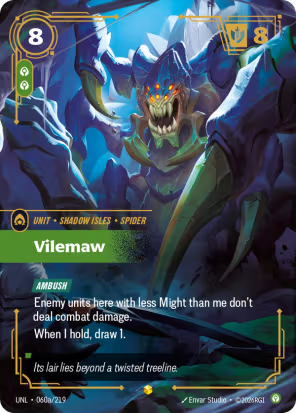
This lets you reinforce a battlefield mid-fight instead of being stuck sending units from your base one slow move at a time.
Assault
Unit keywordA unit with Assault [X] has plus X Might while it is attacking in combat.

Assault turns a unit that looks average on paper into a much harder hitter the moment it attacks, which changes how much you need to defend against it.
B
Backline
Unit keywordA unit with Backline must be assigned lethal combat damage last, after every other friendly unit without Backline has been assigned lethal damage first.
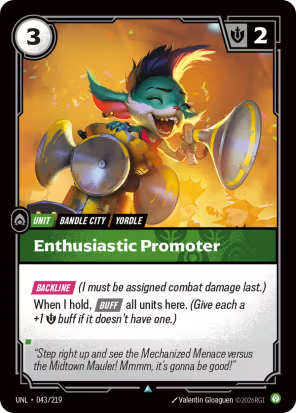
Backline is the opposite of Tank: instead of soaking up hits, this unit hangs back and forces your opponent to deal with everyone else before they can touch it.
Burn
Game actionBurn sends cards from a player’s Main Deck directly to the Trash. Some Burn effects target your own deck to fuel synergies that reward having cards in the Trash. Others target your opponent’s deck to remove cards before they can be drawn.
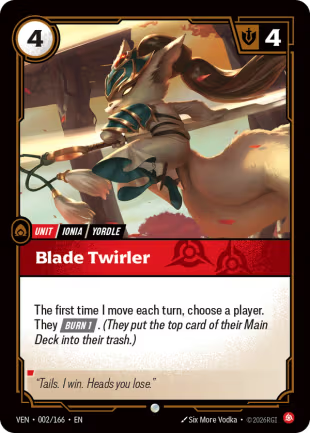
Burn changes how you think about your deck as a resource: it can be a cost you pay on purpose, or a threat your opponent uses to shrink what you have left to draw.
D
Deathknell
Permanent keywordWhen a permanent with Deathknell is killed and sent to the trash, it triggers an effect listed on the card.

Deathknell means killing a unit is not always clean: the card still does something on the way out, so factor that in before you decide to attack or trade.
Deflect
Permanent keywordAny spell or ability an opponent controls that targets a unit with Deflect [X] costs X extra Power to play or activate, for each time it chooses that unit.
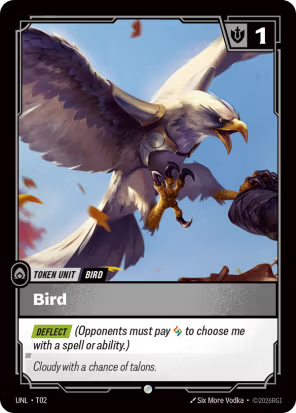
Deflect makes your unit more expensive for opponents to target with spells, so it protects key units from being picked off cheaply.
E
Empowered
Any card typeEmpowered is the state a card enters after its Empower cost has been paid. While a card is Empowered, it gains the abilities listed under the Empowered keyword. On Punching Poro, being Empowered gives +1 Might. The Empowered state lasts until the card leaves play or is Disempowered.
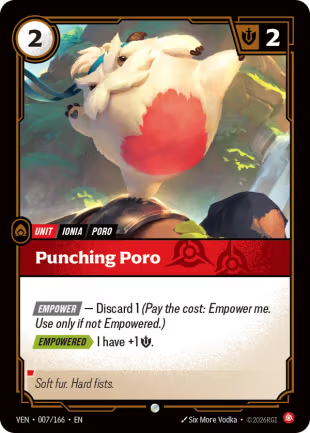
Empower and Empowered work as a pair: Empower is the action you take to activate the state, Empowered is the ongoing benefit you receive while that state is active. A card can only be Empowered once per game.
Equip
Gear keywordEquip is an activated ability on gear cards that lets you attach that gear to a unit you control by paying its listed cost.
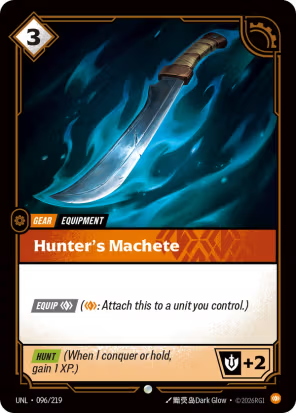
Equip is how equipment in Riftbound works: you pay to attach it, and from then on the gear’s abilities and Might bonus apply to the unit wearing it.
Full Gear and Equipment guide on RiftboundGuide.com.Exhaust
Game actionExhausting a unit or rune rotates it sideways to show it has been used, and an exhausted card cannot be exhausted again until it is readied.
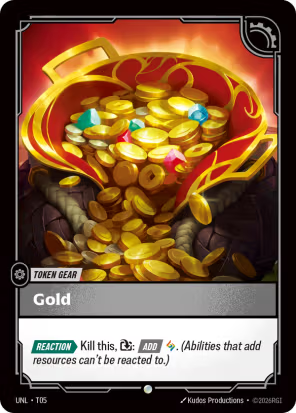
Exhaust is the core cost for moving units and tapping runes: once a unit is exhausted it cannot move or be exhausted as a cost again until your next turn readies everything.
F
Flow
Game actionFlow lets you play cards from your Trash instead of from your hand. A card with Flow can be retrieved and played from cards already used or discarded, giving you access to resources your opponent might expect to be gone.
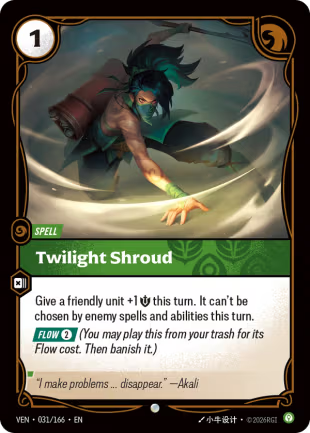
Flow makes your Trash a second hand: the more cards you have used, the more options Flow gives you, so decks built around Flow deliberately cycle through cards quickly.
G
Ganking
Unit keywordA unit with Ganking can use its standard move to travel directly from one battlefield to another battlefield, instead of only moving to or from its base.
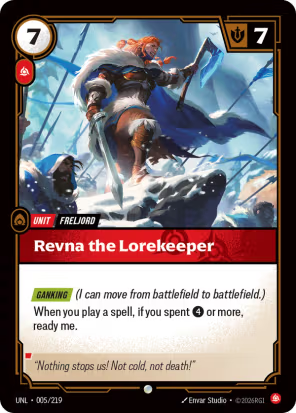
Most units can only move between their base and one battlefield at a time, so Ganking lets certain units roam the board freely and apply pressure anywhere.
H
Hidden
Unit / Spell / Gear keywordA card with Hidden can be placed face-down at a battlefield you control during your turn by paying one universal resource, and it gains Reaction while hidden, letting you play it at any point later.

Hidden is one of the most powerful bluffing tools in the game: your opponent has to make decisions knowing you might have something face-down that could change the fight.
Hunt
Unit keywordWhen a unit with Hunt [X] conquers or holds a battlefield, its controller gains X XP.

Hunt is how you build up XP in Unleashed: winning battles with Hunt units earns you the currency that powers Level abilities on your champions.
L
Legion
Any card typeLegion activates an additional ability printed on the card whenever you have played at least one other card earlier the same turn.
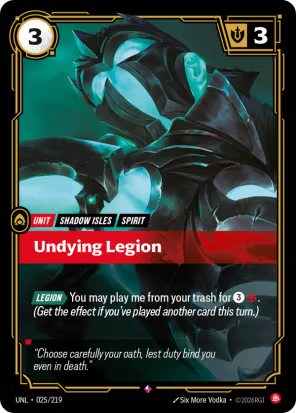
Legion rewards you for building a hand full of cheap cards that you can chain together, because each one you play activates Legion on everything else you play that turn.
Level
Any card typeLevel [N] activates an additional ability on a card while the controlling player has N or more XP.
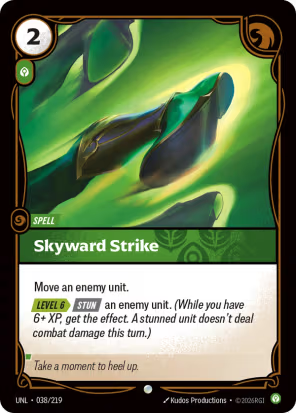
Level is the Unleashed set’s progression mechanic: the more XP you collect, the more powerful your champion and unit abilities become during a game.
P
Predict
Game actionPredict lets you look at one or more cards from the top of your main deck, recycle any you do not want, and put the rest back on top in any order you choose.
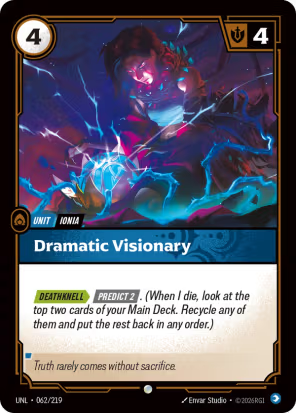
Predict is one of the best tools for controlling what you draw next: you see what is coming, bin the cards that are useless right now, and stack the top of your deck in your favour.
Predict vs Vision: What Is the Difference?
Both Predict and Vision let you look at the top of your Main Deck, but Predict is the stronger version of the two. Vision shows you one card and gives you a single choice: keep it or recycle it to the bottom. Predict shows you multiple cards, lets you recycle any you do not want, and puts the rest back on top in any order you choose. If you have both available, Predict gives you far more control over what you draw next.
Q
Quick-Draw
Gear keywordGear with Quick-Draw automatically attaches itself to a unit you control when played, using Reaction timing, without needing to pay an Equip cost.

Quick-Draw removes the normal two-step process of playing and then equipping gear: it goes on a unit the moment you play it, at any point during a showdown.
R
Reaction
Any card or abilityA card or ability with Reaction can be played or activated during a closed state, meaning during combat or while a showdown is active.
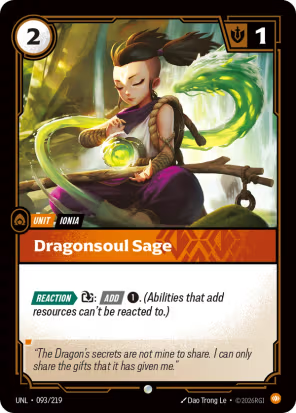
Most cards can only be played outside of combat, so Reaction is what separates instant-speed plays from main-phase-only cards: it is the keyword that lets you respond to what your opponent does.
Ready
Game actionReadying a unit or rune rotates it back to its upright position, returning it to an available state so it can be exhausted and used again.

Ready is the reset button that happens at the start of every turn: understanding when things ready and when effects let you ready things early is important for planning your moves.
Recycle
Game actionRecycling a card takes it from the specified zone, such as your hand or trash, and places it on the bottom of your main deck or rune deck.
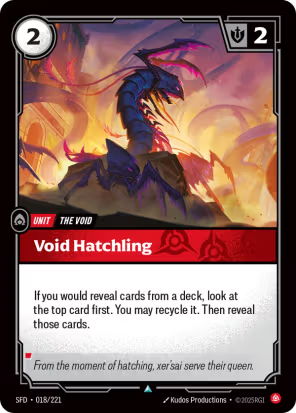
Recycle is how Riftbound replaces discarding: instead of losing cards permanently, you return them to your deck to be drawn again later.
Repeat
Spell keywordRepeat [Cost] lets you pay an optional extra cost when playing a spell to execute that spell’s effect a second time.
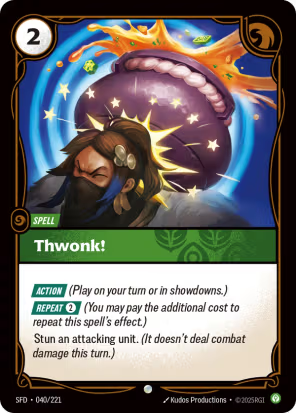
Repeat turns a single spell into a two-for-one when you have the resources to pay for it: the second execution can target something different, which gives you real flexibility.
S
Shield
Unit keywordA unit with Shield [X] has plus X Might while it is defending in combat.

Shield is the defensive counterpart to Assault: a unit that looks too small to block suddenly becomes much harder to trade through when it is on defense.
T
Tank
Unit keywordA unit with Tank must be assigned lethal combat damage before any of your other units without Tank can be assigned damage.
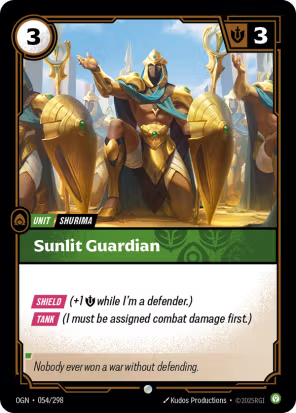
Tank forces attackers to deal with your big blocker before reaching your other units, so it is the keyword that keeps your smaller or more valuable units alive in a fight.
Temporary
Permanent keywordA permanent with Temporary is automatically destroyed at the start of its controller’s next Beginning Phase, before scoring happens.
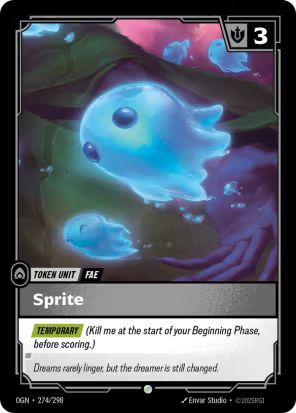
Temporary tells you a unit or gear will disappear at the start of your next turn, so it is useful for holding a battlefield right now but should not be relied on for long-term board presence.
U
Unique
Deck construction keywordA card with Unique can only appear once in your deck, even though most cards allow up to three copies.
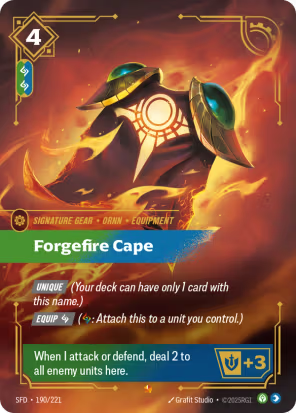
When you see Unique on a card, it is the game telling you this card is powerful enough that only one copy is allowed: check whether you have already included it before adding another.
V
Vision
Permanent keywordWhen a permanent with Vision is played, its controller looks at the top card of their main deck and may recycle it.

Vision gives you a small look at the top of your deck and lets you put a card you do not want back on the bottom, which smooths out your draws over a long game.
Predict vs Vision: What Is the Difference?
Both Predict and Vision let you look at the top of your Main Deck, but Predict is the stronger version of the two. Vision shows you one card and gives you a single choice: keep it or recycle it to the bottom. Predict shows you multiple cards, lets you recycle any you do not want, and puts the rest back on top in any order you choose. If you have both available, Predict gives you far more control over what you draw next.
W
Weaponmaster
Unit keywordWhen a unit with Weaponmaster is played, its controller may choose a piece of equipment they control and attach it to the Weaponmaster unit at a reduced cost.
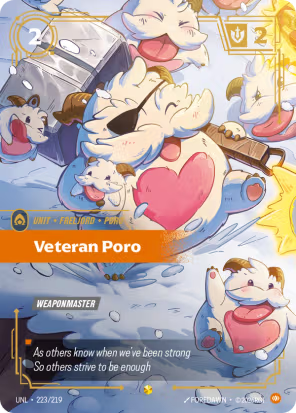
Weaponmaster effectively comes with a built-in Equip discount the moment it enters the board, making it easier to gear up a unit immediately rather than spending a separate action later.
X
XP
Game resource (Unleashed)XP is a resource you accumulate during the game that unlocks stronger abilities on Level cards when you reach the required amount.
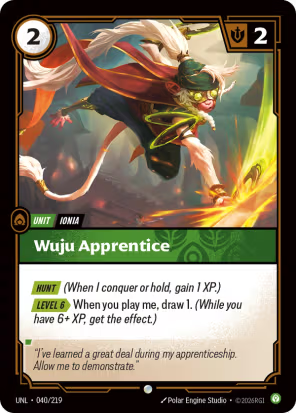
XP is the engine that makes Unleashed feel different from earlier sets: as the game goes on and you win fights, your champion and units grow stronger, so building toward a high XP count is often the right plan.
Keywords not confirmed in these rules
Isolate: This keyword appeared in some pre-launch materials for Unleashed but is not present in the official Core Rules document (version RUP3, last updated 30 March 2026). We have not included it here. If it appears in a future rules update, this page will be updated to match.
Key Game Terms
These terms appear throughout the rules but are not keywords printed on cards. They describe core game concepts every player needs to know.
Card
A card refers specifically to a card in your Main Deck. It does not include Legends, runes, battlefields, or tokens.
When a rule says “play a card” or “draw a card,” it means cards from your Main Deck only. Legends, runes, and battlefields are governed by separate rules.
Channel
To channel a rune is to take the top rune from your Rune Deck and place it on the board ready to use. You channel 2 runes automatically at the start of each turn. Some spells and abilities may tell you to channel at other times.
Channelling is how your rune supply grows each turn. Effects that let you channel additional runes beyond your automatic 2 give you more Power and Energy to spend that turn.
Exhaust
Cards, runes, and Legends exhaust by turning sideways to show they have been used. An exhausted card cannot exhaust again until it is readied.
Exhaust is the core cost for moving units and spending runes. Tracking what is exhausted and what is ready is essential for planning your turn.
Ready
A card or rune that is ready is upright and available to be used. Cards ready at the start of each turn.
Most things ready automatically at the start of your turn. Effects that ready cards early are valuable because they let you act again before your next turn begins.
Recycle
To recycle a card or rune is to put it on the bottom of the appropriate deck rather than removing it from the game.
Recycle is how Riftbound avoids permanent discard. Cards sent to the bottom of your deck can be drawn again, so recycling is less punishing than it might seem.
Token
Tokens are units created during play rather than drawn from your deck. You can use the printed token cards to represent them, or use any object you can clearly ready and exhaust if you run out.
Tokens do not start in your deck and cannot be included during deckbuilding. They only exist while in play.
Where to go next
Now that every keyword makes sense, the next step is understanding how they interact during a real game. The How to Play Riftbound hub on RiftboundGuide.com walks through turns, combat, and the card types from the beginning. If you want to understand what the symbols on your cards mean visually, the Riftbound Icons page covers every symbol you will see on a card.